How to type Armenian with this keyboard
Choose a mode with the tabs on the keyboard:
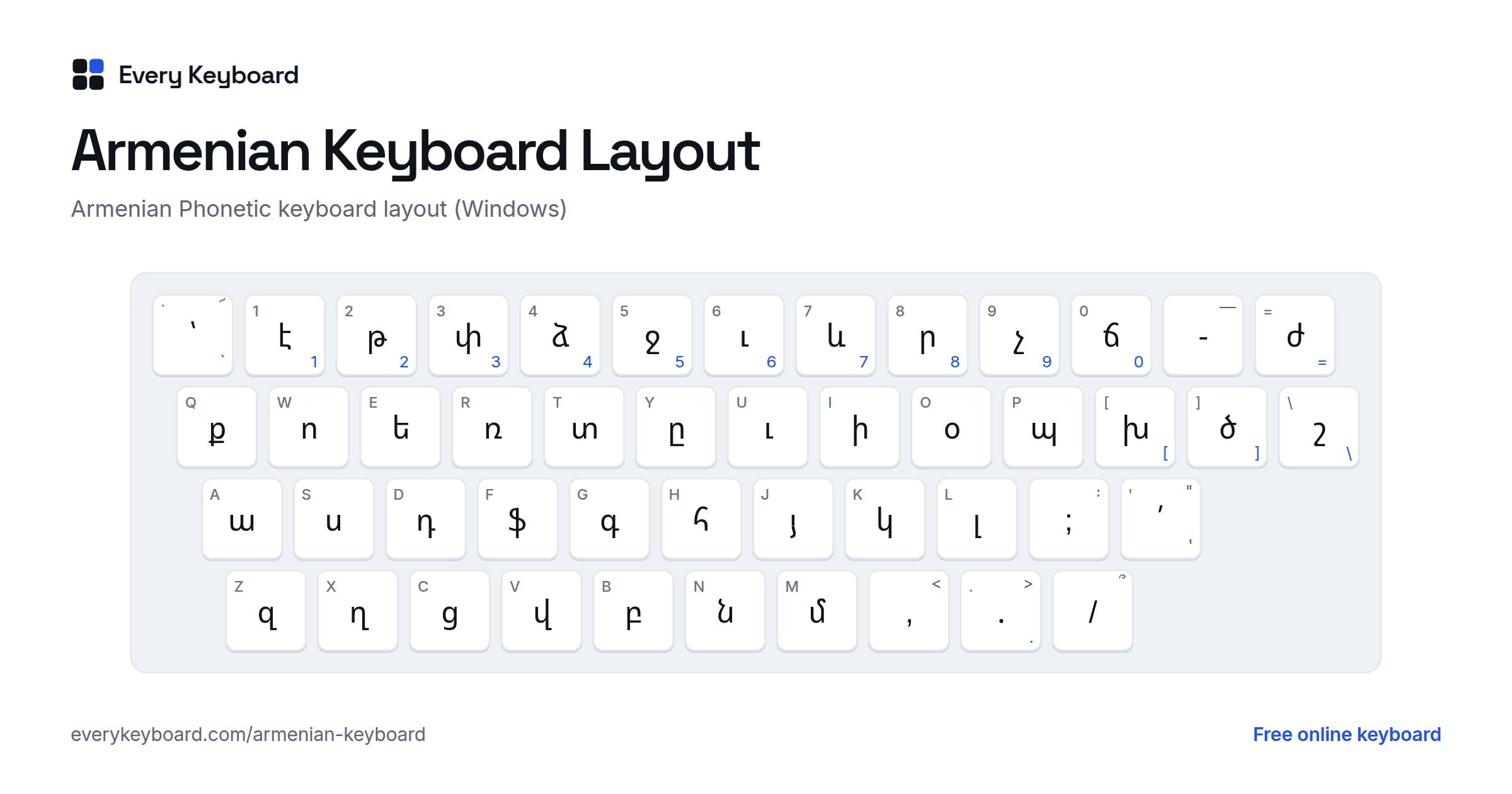
- Eastern Armenian (phonetic): the Windows Armenian Phonetic layout, the one most people in Armenia use on a computer. Your keys type Armenian right away, and most letters sit on the English key with a similar sound: A is ա, B is բ, M is մ.
- Western Armenian (phonetic): the layout used for Western Armenian, the language of most of the diaspora in France, Lebanon, the United States and elsewhere. Letters are placed by their Western sound, so B types պ and P types բ.
- Transliteration: type Armenian in Latin letters and it turns into Armenian as you type. hayeren becomes հայերեն (Armenian) and inch becomes ինչ (what).
- Alphabet: all 38 letters in order, then the ligature և, each with its Latin spelling. Click a letter to add it, with Shift for a capital.
The buttons above the keyboard add the Armenian punctuation: the full stop ։, the question mark ՞, the exclamation mark ՜, the emphasis mark ՛, the pause mark ՝, the quotation marks « », the ligature և and the dram sign ֏. In the two layout modes, press Esc to switch between Armenian and normal English typing.
Armenian phonetic keyboard layout (Eastern)
This is Windows Armenian Phonetic, checked key by key against the layout data Unicode publishes for Windows. The small letter on each key is the English key in the same place.
- Letters with no English look-alike are on the number row: 1 է, 2 թ, 3 փ, 4 ձ, 5 ջ, 6 ւ, 7 և, 8 ր, 9 չ, 0 ճ and = ժ. To type digits, hold AltGr (right Alt).
- [ is խ, ] is ծ and \ is շ. W is ո, O is օ, R is ռ (the rolled r) and Y is ը. X is ղ and C is ց.
- Punctuation: Shift+; is the full stop ։, Shift+/ is ՞, ' is ՛, ` is ՝ and Shift+` is ՜. The . key types the mijaket ․. On European keyboards, the extra key left of Z types » and «.
Mac has its own phonetic layout, Armenian - HM QWERTY, and it is not the same. It keeps the digits and punctuation of an English keyboard, and puts several letters elsewhere: W is ւ, R is ր, Y is յ, O is ո, J is ձ, Q is ճ, X is խ and C is ծ. The rest are on Option: Option+E է, Option+T թ, Option+P փ, Option+K ք, Option+Q չ, Option+J ջ, Option+R ռ, Option+O օ, Option+A ը, Option+S շ, Option+L ղ, Option+Z ժ, Option+C ց, Option+V և, and Option+. ։, Option+/ ՞. This page follows the Windows layout.
Western Armenian keyboard layout
The Western layout is called Armenian - Western QWERTY on a Mac and Armenian Western (Legacy) on Windows. The two have the same letters on the same keys; the diagram shows the Mac version, whose 1 key types the real full stop ։ (Windows types a colon there) and whose digits are on Option. The letters follow Western pronunciation: T is դ and D is տ, P is բ and B is պ, G is կ, K is ք and C is գ, J is ճ.
More of the number row is punctuation here: 4 is ՛, 5 a comma, 6 a hyphen, 7 a period, 8 and 9 are « and », and Shift+\ is ՞. Letters without a Latin look-alike are on the punctuation keys: [ չ, ] ջ, ; թ, ' փ, , շ, . ղ, / ծ, and - ռ, = ժ, 0 օ.
Eastern and Western Armenian
Armenian has two standard forms. Eastern Armenian is spoken in Armenia and by Armenians in Iran and Russia. Western Armenian comes from the Armenians of the Ottoman Empire and is the language of most of the diaspora in France, Lebanon, Syria, Turkey and the Americas. They use the same alphabet and mostly understand each other, but they differ in two ways that matter when you type.
Pronunciation: b and p, d and t trade places
Eastern Armenian has three kinds of these consonants: voiced (b), plain (p, said with no puff of air) and aspirated (p', with a puff of air). Western Armenian has only two, so the letters shift: the letter an Eastern speaker says as b, a Western speaker says as p, and the plain p becomes b.
| Letters | Eastern | Western |
|---|---|---|
| բ պ փ | b, p, p' | p, b, p' |
| գ կ ք | g, k, k' | k, g, k' |
| դ տ թ | d, t, t' | t, d, t' |
| ձ ծ ց | dz, ts, ts' | ts', dz, ts' |
| ջ ճ չ | j, ch, ch' | ch', j, ch' |
That's why the same name is spelled in two ways in English:
| Armenian | Eastern | Western |
|---|---|---|
| Պետրոս | Petros | Bedros |
| Գրիգոր | Grigor | Krikor |
| Կարապետ | Karapet | Garabed |
| Հակոբ (Յակոբ) | Hakob | Hagop |
| բարև (բարեւ), hello | barev | parev |
| ջուր, water | jur | chur |
The spelling doesn't change, only the sound. Typing by sound in Latin letters gives the Eastern spelling, so to write Պետրոս in Transliteration mode, type petros even if you say Bedros. The Western keyboard layout is the easy way to type by Western sound.
Spelling: reformed and classical orthography
Soviet Armenia reformed the spelling in the 1920s, with changes again in 1940, to bring it closer to how words are said. Armenia uses this reformed orthography. Western Armenians, and the Armenians of Iran, kept the classical orthography of Mesrop Mashtots. The differences are regular:
| English | Reformed (Armenia) | Classical (diaspora, Iran) |
|---|---|---|
| Armenian (the language) | հայերեն | հայերէն |
| Yerevan | Երևան | Երեւան |
| one | մեկ | մէկ |
| more | ավելի | աւելի |
| Hovhannes (John) | Հովհաննես | Յովհաննէս |
| the surname Petrosyan / Bedrossian | Պետրոսյան | Պետրոսեան |
All the letters of both spellings are on every mode of this keyboard. Classical spelling uses more է, ւ after a vowel (աւ, իւ) and յ at the start of names; the surname ending -յան is -եան in classical spelling.
The Armenian alphabet
The Armenian alphabet was created by Mesrop Mashtots in 405 AD, with 36 letters. Two more, օ and ֆ, were added in the Middle Ages, giving the 38 letters below. Armenian has capital and small letters, and is written left to right. In Armenia the ligature և is also taught as a letter, making 39.
| Letter | Name | Eastern sound | Western sound | Type | Key |
|---|---|---|---|---|---|
| Ա ա | ayb / ayp | a as in father | same | a | A |
| Բ բ | ben / pen | b | p | b | B |
| Գ գ | gim / kim | g as in go | k | g | G |
| Դ դ | da / ta | d | t | d | D |
| Ե ե | yech | e as in bet; ye at the start of a word | same | e | E |
| Զ զ | za | z | same | z | Z |
| Է է | e | e as in bet | same | e' | 1 |
| Ը ը | ət | ə, the a in about | same | y' | Y |
| Թ թ | t'o | t with a puff of air, as in top | same | t' | 2 |
| Ժ ժ | zhe | s in measure | same | zh | = |
| Ի ի | ini | ee as in see, but short | same | i | I |
| Լ լ | lyun | l | same | l | L |
| Խ խ | khe | ch as in Scottish loch | same | kh | [ |
| Ծ ծ | tsa / dza | ts with no puff of air | dz | ts' | ] |
| Կ կ | ken / gen | k with no puff of air, as in skip | g | k | K |
| Հ հ | ho | h | same | h | H |
| Ձ ձ | dza / tsa | dz as in adze | ts with a puff of air | dz | 4 |
| Ղ ղ | ghat / ghad | a throaty gh, close to a French r | same | gh | X |
| Ճ ճ | che / je | ch with no puff of air | j as in jam | ch' | 0 |
| Մ մ | men | m | same | m | M |
| Յ յ | hi | y as in yes | y; h at the start of a word | y | J |
| Ն ն | nu | n | same | n | N |
| Շ շ | sha | sh | same | sh | \ |
| Ո ո | vo | o; vo at the start of a word | same | o | W |
| Չ չ | ch'a | ch with a puff of air, as in church | same | ch | 9 |
| Պ պ | pe / be | p with no puff of air, as in spin | b | p | P |
| Ջ ջ | je / che | j as in jam | ch as in church | j | 5 |
| Ռ ռ | rra | a rolled r, as in Spanish perro | a rolled r, often said like ր | rr | R |
| Ս ս | se | s | same | s | S |
| Վ վ | vev | v | same | v | V |
| Տ տ | tyun / dyun | t with no puff of air, as in stop | d | t | T |
| Ր ր | re | a soft r, a single tap | same | r | 8 |
| Ց ց | ts'o | ts with a puff of air, as in cats | same | ts | C |
| Ւ ւ | hyun | only in ու (oo as in food) and և | ու is oo; after a vowel in classical spelling, v (աւ = av) | w | U |
| Փ փ | p'yur | p with a puff of air, as in pot | same | p' | 3 |
| Ք ք | k'e | k with a puff of air, as in kit | same | k' | Q |
| Օ օ | o | o | same | o' | O |
| Ֆ ֆ | fe | f | same | f | F |
Type is what you type in Transliteration mode, and Key is the key on the Eastern phonetic layout. Stress in Armenian is almost always on the last syllable. The digraph ու counts as a single vowel, oo, and in Eastern spelling ւ appears only there and in և.
Typing Armenian in Latin letters
In Transliteration mode, type these Latin letters and they turn into Armenian as you go. Capitals work too: Sh gives Շ. Two letters together make one Armenian letter (sh → շ), and an apostrophe after a letter gives its partner (ch' → ճ, t' → թ).
| Armenian | Type |
|---|---|
| ա բ գ դ ե զ ի լ մ ն ո պ ս վ տ ր ֆ հ | a b g d e z i l m n o p s v t r f h |
| յ / ը | y / y' (or @) |
| ե / է | e / e' |
| ո / օ | o / o' |
| ու | u (or ou) |
| ւ | w |
| տ / թ | t / t' (or th) |
| պ / փ | p / p' (or ph) |
| կ / ք | k / k' (or q) |
| չ / ճ | ch / ch' |
| ց / ծ | ts (or c) / ts' |
| ջ | j |
| ձ | dz |
| շ | sh |
| ժ | zh |
| խ | kh (or x) |
| ղ | gh |
| ր / ռ | r / rr |
| և | & |
| ե, ո | ye, vo at the start of a word |
Examples: Hayastan gives Հայաստան (Armenia), shnorhakalut'yun gives շնորհակալություն (thank you) and yes gives ես (I). To keep two letters apart, type _ between them: s_h gives սհ. The mode doesn't guess և, so type & for it: bar& gives բարև (hello).
Armenian punctuation
Armenian has its own punctuation. The Armenian marks are in the Unicode Armenian block (U+0530 to U+058F), while the comma, the mijaket and « » are shared with other scripts. The period is not a dot but ։, and the question, exclamation and emphasis marks sit inside the word instead of at the end of the sentence.
| Mark | Name | Use | Phonetic key |
|---|---|---|---|
| ։ | verjaket | Full stop. It looks like a colon: Ես հայ եմ։ (I am Armenian.) | Shift+; |
| , | storaket | Comma, the same as in English. | , |
| ․ | mijaket | A middle stop, a pause between a comma and a full stop, used much like a semicolon or colon. Keyboards type it as U+2024. | . |
| ՝ | but | A short pause, lighter than a comma, for example after an introductory phrase or where a word is left out. | ` |
| ՞ | hartsakan nshan | Question mark, placed on the stressed vowel of the word the question is about. | Shift+/ |
| ՜ | batsakanchakan nshan | Exclamation mark, also on the stressed vowel. | Shift+` |
| ՛ | shesht | Emphasis mark, on the stressed vowel of a stressed word or a command: Գնա՛ (Go!). | ' |
| « » | chakertner | Quotation marks. | Extra ISO key (buttons here) |
| ֊ | hyphen | Armenian hyphen, U+058A. Most people type the ordinary - instead. | Button |
How the question mark ՞ works
The Armenian question mark goes on the stressed vowel of the word that carries the question, usually the question word itself: Ինչպե՞ս ես։ (How are you?), Ո՞վ է։ (Who is it?). If there is no question word, it goes on the word you are asking about: Դու վաղը կգա՞ս։ (Are you coming tomorrow?). The sentence still ends with ։. With ու, the mark goes after the ո: Ինչո՞ւ (why?).
In Unicode, ՞ is its own character, typed straight after the vowel, and fonts draw it raised above the letter. So you type the word up to the stressed vowel, add ՞ (Shift+/ on the phonetic layout, or the button), and carry on. The exclamation mark ՜ (Ինչ գեղեցի՜կ է։, How beautiful!) and the emphasis mark ՛ (Գնա՛։, Go!) are typed the same way.
The ligature և
և (U+0587) joins ե and ւ and is said yev at the start of a word and ev inside one. On its own it means and. Reformed spelling uses it inside words too: Երևան, բարև. Classical spelling writes the two letters եւ instead. և has no one-letter capital, so a sentence starts with Եվ (reformed) or Եւ (classical). On this keyboard it's the 7 key in Eastern mode, Shift+7 in Western mode and & in Transliteration mode.
The currency of Armenia, the dram, has its own sign ֏ (U+058F), added to Unicode in 2012. Fonts from before then may show it as a box.
How to add an Armenian keyboard to your device
Windows
Settings → Time & language → Language & region → Add a language → Armenian (Հայերեն). Then click the three dots next to Armenian → Language options → Add a keyboard. Choose Armenian Phonetic for the Eastern layout on this page, or Armenian Western (Legacy) for the Western one. Switch between keyboards with Windows+Space.
Mac
System Settings → Keyboard → Text Input → Edit → + → Armenian. Choose Armenian - HM QWERTY for a phonetic Eastern layout (some keys differ from Windows, see above) or Armenian - Western QWERTY for Western Armenian. Switch with Control+Space or the Globe key.
iPhone and iPad
Settings → General → Keyboard → Keyboards → Add New Keyboard → Armenian. Tap the globe key to switch. Hold a key to see the letters and marks it hides.
Android
In Gboard, open Settings → Languages → Add keyboard → Armenian (Հայերեն) and choose a layout. Tap the globe key or hold the space bar to switch.
Chromebook
Settings → Device → Keyboard and inputs → Input settings → Add input methods → Armenian. Switch with Ctrl+Space.
To see Armenian correctly, you need a font with Armenian letters. Windows has Sylfaen, Macs and phones have Armenian fonts built in, and Noto Sans Armenian is a free font from Google. In Microsoft Word, you can also type a code and press Alt+X: 0589 gives ։, 055E gives ՞, 0587 gives և.
Frequently asked questions
How do I type Armenian without an Armenian keyboard?
Use this page. In Eastern Armenian (phonetic) mode your keys type Armenian right away, and most letters sit on the English key that sounds alike: A is ա, B is բ, S is ս. In Transliteration mode you type Armenian in Latin letters (hayeren becomes հայերեն). When you're done, press Copy and paste the text anywhere.
Which Armenian keyboard should I add on Windows?
Windows offers Armenian Phonetic, Armenian Typewriter, Armenian Eastern (Legacy) and Armenian Western (Legacy). If you learned to type on an English keyboard, Armenian Phonetic is the easiest: it's the Eastern layout on this page. Armenian Typewriter follows the layout of Armenian typewriters, with no link between letters and English keys. Western Armenian speakers usually pick Armenian Western (Legacy), which matches the Western layout on this page.
Where does the Armenian question mark go?
Not at the end of the sentence. The ՞ goes on the stressed vowel of the word the question is about: Ինչպե՞ս ես (How are you?), Ո՞վ է (Who is it?). In the text it is a separate character typed right after that vowel. On the phonetic layout it's Shift+/. The exclamation mark ՜ and the emphasis mark ՛ work the same way.
How do I type և, and what is its capital?
և is the ligature of ե and ւ, said yev or ev, and it is also the word for and. On the Eastern phonetic layout it's the 7 key, on the Western layout Shift+7, in Transliteration mode type &. It has no single capital letter: at the start of a sentence Eastern spelling writes Եվ and classical spelling writes Եւ.
What's the difference between the Eastern and Western Armenian keyboards?
They put the letters on different keys because the two languages pronounce several letters differently. On the Eastern layout B types բ (b in Eastern); on the Western layout B types պ, which Western Armenians say as b. The same goes for D and T, G and K, and J. Both type the same Unicode letters, so text from either one reads correctly everywhere.
Is my text private?
Yes. Everything runs in your browser. Your draft is kept on your own device so it survives a refresh, and it's never uploaded.